
Rebuilding Resilience: Frameworks, Metrics, and Research for Communities and Individuals
A research compilation covering conceptual overviews, neighborhood-level frameworks, quantitative indices, and psychological resilience scales—tools for understanding, measuring, and strengthening resilience at every level.
Kristine Socall, MBA International Economic Development
Founder & Executive Director, Gifted Dreamers, Inc. 501(c)(3)
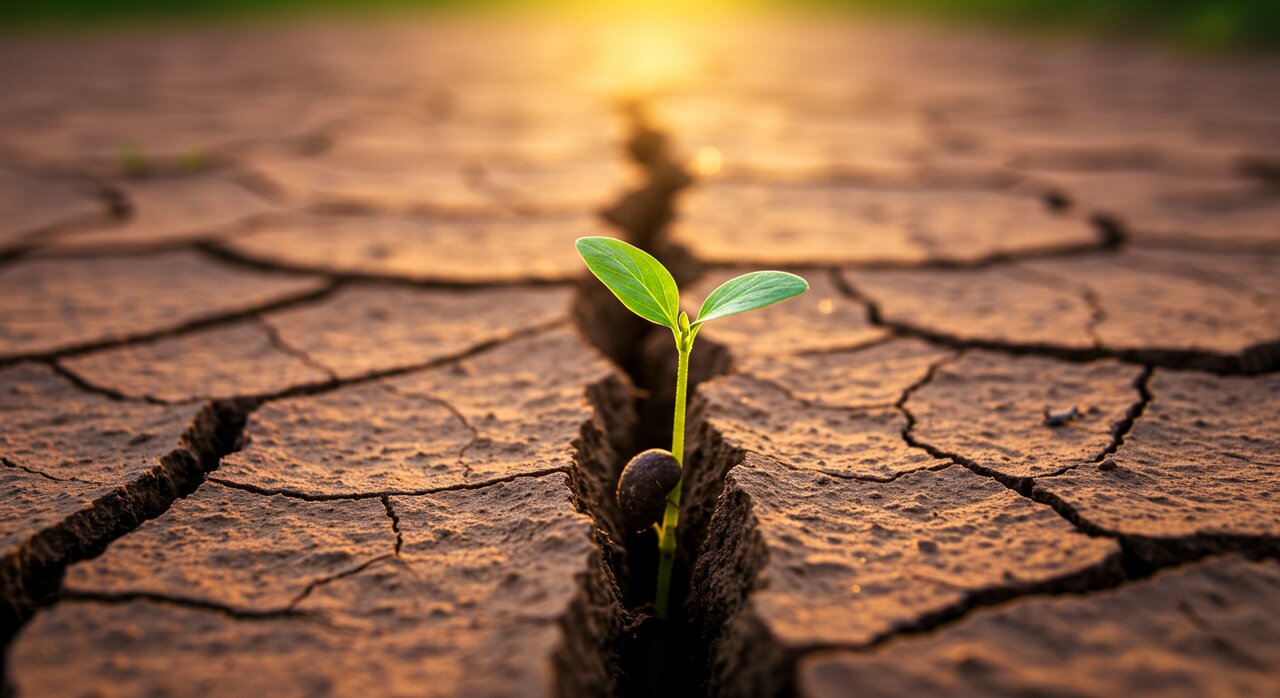
Resilience is used in several overlapping ways: as the capacity to withstand shocks, the dynamic process of adapting over time, and the outcomes that signal successful recovery or transformation. It helps to explicitly distinguish personal psychological resilience from community or neighborhood resilience, and then borrow concrete frameworks and metrics from each.[1][2][3][4]
Big-Picture Conceptual Overviews
What Do We Mean by “Community Resilience”? A Systematic Literature Review of How It Is Defined and Measured
Patel, S.S. et al. (2017) — PLOS Currents Disasters
Synthesizes dozens of definitions and frameworks for community resilience, identifies common elements (local knowledge, networks, communication, governance, health), and discusses implications for practice and measurement.[2]
Resilience as Pathway Diversity: Linking Systems, Individual and Societal Resilience
Lade, S.J. et al. (2019) — arXiv
Proposes resilience as “pathway diversity” in social–ecological systems, giving language to talk about resilience as multiple possible futures rather than simply “bouncing back.”[4]
Community Resilience: A Multidisciplinary Exploration for Inclusive Frameworks
(2024) — ScienceDirect
Provides an updated multidisciplinary review, clustering community resilience work into key themes (infrastructure, social capital, governance, equity), useful to structure essay sections and program design.[5]
Community and Neighborhood Resilience Frameworks
EnRiCH Community Resilience Framework for High-Risk Populations
O’Sullivan, T.L. et al. (2014) — PLOS Currents Disasters
Puts “adaptive capacity” at the center, surrounded by four strategic areas (leadership, asset/resource management, awareness/communication, connectedness/engagement) driven by empowerment, innovation, and collaboration; helpful for describing levers neighborhoods can actually pull.[6]
IFRC Framework for Community Resilience
International Federation of Red Cross and Red Crescent Societies (2014) — PDF
Practice-oriented framework showing how to support communities to self-mobilize, strengthen local organizations, and link everyday well-being work to disaster resilience.[7]
Creating the Conditions for Community Resilience
DOAJ (open access)
Develops a conceptual framework summarizing common requirements for community resilience (e.g., social capital, inclusive governance, local capabilities), giving language for “upstream” neighborhood work beyond emergency planning.[8]
Community Resilience to Pandemics: An Assessment Framework Integrating Social, Built and Natural Environments
(2022) — Europe PMC
Offers a concrete, indicator-based framework for assessing pandemic resilience at community scale, illustrating how to operationalize “resilience” in terms of environment, health systems, and social factors.[9]
Community Resilience to Disasters: Measuring and Improving Community Resilience
De Iuliis, M. et al. (2022) — arXiv
Uses the PEOPLES framework (Population, Environmental, Organized governmental services, Physical infrastructure, Lifestyle, Economic, Social–cultural) with fuzzy logic to quantify resilience, useful as an example of making resilience computable.[10]
Quantitative Indices and Metrics
A Value-Focused Thinking Approach to Measure Community Sustainable Resilience
Suresh, R. et al. (2024) — arXiv
Builds an objectives hierarchy and indicators across social, economic, infrastructure, and environmental dimensions; reviews existing indices like the Community Disaster Resilience Index and Resilience Capacity Index, which can be referenced as examples of composite “resilience scores.”[11][3]
Deep Learning-Driven Community Resilience Rating Based on Social–Ecological–Technological Systems
(Resili-Net, 2023) — arXiv
Develops a machine-learning rating system for urban resilience using features like infrastructure robustness, facility access, and social conditions, showing how newer work uses big data to map resilience across neighborhoods.[12]
Development and Validation of a Community Resilience Scale for Youth
Silva, S.M. et al. (2022) — PLOS ONE
Provides a psychometrically validated survey to assess youths’ perception of community resilience; a good example of “bottom-up” measurement grounded in lived experience.[13]
Community Resilience to Pandemics (above) and Social Resources and Community Resilience in the Wake of Disasters
Cagney, K.A. et al. (2016) — PLOS ONE
Introduces the Resilience Activation Framework, focusing on how access to social resources (formal and informal support) activates resilience capacities; useful for making “social infrastructure” measurable.[14][15]
Personal Psychological Resilience: Frameworks and Scales
Resilience Resources, Coping Strategies and Positive Adaptation
Fullerton, D.J. et al. (2021) — PLOS ONE
Integrates several theoretical models (e.g., resilience as dynamic process) and tests a path model linking resilience resources, coping strategies, and outcomes; helpful for writing about mechanisms rather than traits.[1]
Conceptualizing and Measuring Psychological Resilience: What Can We Learn from Existing Models?
(review article) — ScienceDirect
Argues for defining psychological resilience in terms of dynamic responses to stressors and reviews measurement approaches, including outcome-based and process-based metrics.[16]
A Conceptual Framework for the Neurobiological Study of Resilience
Kalisch, R. et al. (2015) — bioRxiv/PubMed
Proposes how to quantify resilience as relatively preserved mental health under stress, with implications for how to think about “resilience as outcome” in longitudinal terms.[17]
The ART of Resilience: A Theoretical Bridge Across Approaches
Frontiers in Psychology (2025) — Frontiers
Introduces the ART framework (Acknowledgment of resources, Reframing stressors, Tailoring responses) as a practical, process-oriented model that can be translated into everyday practices for individuals and groups.[18]
Community vs Personal Resilience: A Quick Comparison
| Aspect | Community / Neighborhood Resilience | Personal Resilience |
|---|---|---|
| Core idea | Collective capacity to withstand, adapt, recover, and transform.[2][6] | Individual’s dynamic ability to maintain or regain functioning under stress.[1][16] |
| Typical frameworks | EnRiCH; IFRC; Resilience Activation; PEOPLES; pandemic resilience models.[6][7][15][10][9] | ART framework; resilience resources models; neurobiological resilience.[18][1][17] |
| Common metrics | Indices across social, economic, infrastructure, environmental, governance dimensions.[11][3][9] | Scales like CD-RISC variants, coping patterns, mental health outcomes over time.[1][16] |
| Levers for change | Strengthening local networks, leadership, services, built environment, equity.[6][8][7] | Building coping skills, reframing, social support use, meaning-making.[1][18] |
These pieces should give you: (1) language for different meanings of “resilience”; (2) specific neighborhood-level frameworks you can narrate through stories or local examples; and (3) validated metrics you can reference or adapt into informal “resilience audits” for readers.
Sources
- Fullerton, D.J. et al. — Resilience Resources, Coping Strategies and Positive Adaptation (PLOS ONE, 2021) ↑
- Patel, S.S. et al. — What Do We Mean by “Community Resilience”? (PLOS Currents Disasters, 2017) ↑
- Suresh, R. et al. — A Value-Focused Thinking Approach to Measure Community Sustainable Resilience (arXiv, 2024) ↑
- Lade, S.J. et al. — Resilience as Pathway Diversity (arXiv, 2019) ↑
- Community Resilience: A Multidisciplinary Exploration for Inclusive Frameworks (ScienceDirect, 2024) ↑
- O’Sullivan, T.L. et al. — EnRiCH Community Resilience Framework (PLOS Currents Disasters, 2014) ↑
- IFRC Framework for Community Resilience (2014) ↑
- Creating the Conditions for Community Resilience (DOAJ) ↑
- Community Resilience to Pandemics: An Assessment Framework (Europe PMC, 2022) ↑
- De Iuliis, M. et al. — Community Resilience to Disasters: Measuring and Improving (arXiv, 2022) ↑
- Suresh, R. et al. — Value-Focused Thinking Approach (arXiv PDF, 2024) ↑
- Resili-Net — Deep Learning-Driven Community Resilience Rating (arXiv, 2023) ↑
- Silva, S.M. et al. — Community Resilience Scale for Youth (PLOS ONE, 2022) ↑
- Cagney, K.A. et al. — Social Resources and Community Resilience (PLOS ONE, 2016) ↑
- Resilience Activation Framework (PMC, 2014) ↑
- Conceptualizing and Measuring Psychological Resilience (ScienceDirect) ↑
- Kalisch, R. et al. — Conceptual Framework for Neurobiological Study of Resilience (2015) ↑
- The ART of Resilience: A Theoretical Bridge Across Approaches (Frontiers in Psychology, 2025) ↑
- PubMed 39715248
- Semantic Scholar — Resilience Study (PDF)
- arXiv 2411.08015
- Semantic Scholar — Resilience Research (PDF)
- arXiv 2511.12798v1
- Semantic Scholar — Community Resilience (PDF)
- arXiv 2306.08795
- arXiv 1803.07650
- arXiv 2506.12795v1
- Build Resilience — Community Resilience Framework
- GWU Center for Community Resilience
- ASPR — Community Resilience (HHS)
- Community Science — Putting Community into Community Resilience
- Nature — Resilience Research (2025)
- Community Commons — Resilience Resource
- VUMC — Resilience Theories (PDF)
- ETH Zurich — Modeling Social Resilience (PDF)
- RCLSS — Resilience Article